Vacuum pumping speed calculation and system design

Optimizing the pumping speed and system design ensures efficient operation, a stable vacuum, and the maximum performance of the entire setup.

Why to consider vacuum pumping speed calculation and system design?

Process time

A properly designed vacuum system with the correct pumping speed ensures rapid achievement of the desired vacuum level and long operation time at that level.

Stability and quality

Pumping speed calculation enables uniform and stable pressure maintenance in the chamber. Proper system design minimizes fluctuations and the risk of process failure.

Energy and costs

Optimally chosen pumps reduce energy consumption and equipment wear. This leads to lower operational costs and a longer lifespan for pumps and components.

Pumping time

  • Knowing the chamber volume is crucial to designing a vacuum system, as it determines the gas load and the time needed to reach the target pressure.
  • The calculation assumes ideal behavior, such as the absence of leaks or outgassing; therefore, correction factors are typically applied in practice.
  • For larger chamber volumes, pumping time increases exponentially unless multi-stage or parallel pumping is used.
  • Chamber volume also affects the choice of connecting pipe diameter and length because limited conductance reduces the effective pumping speed.
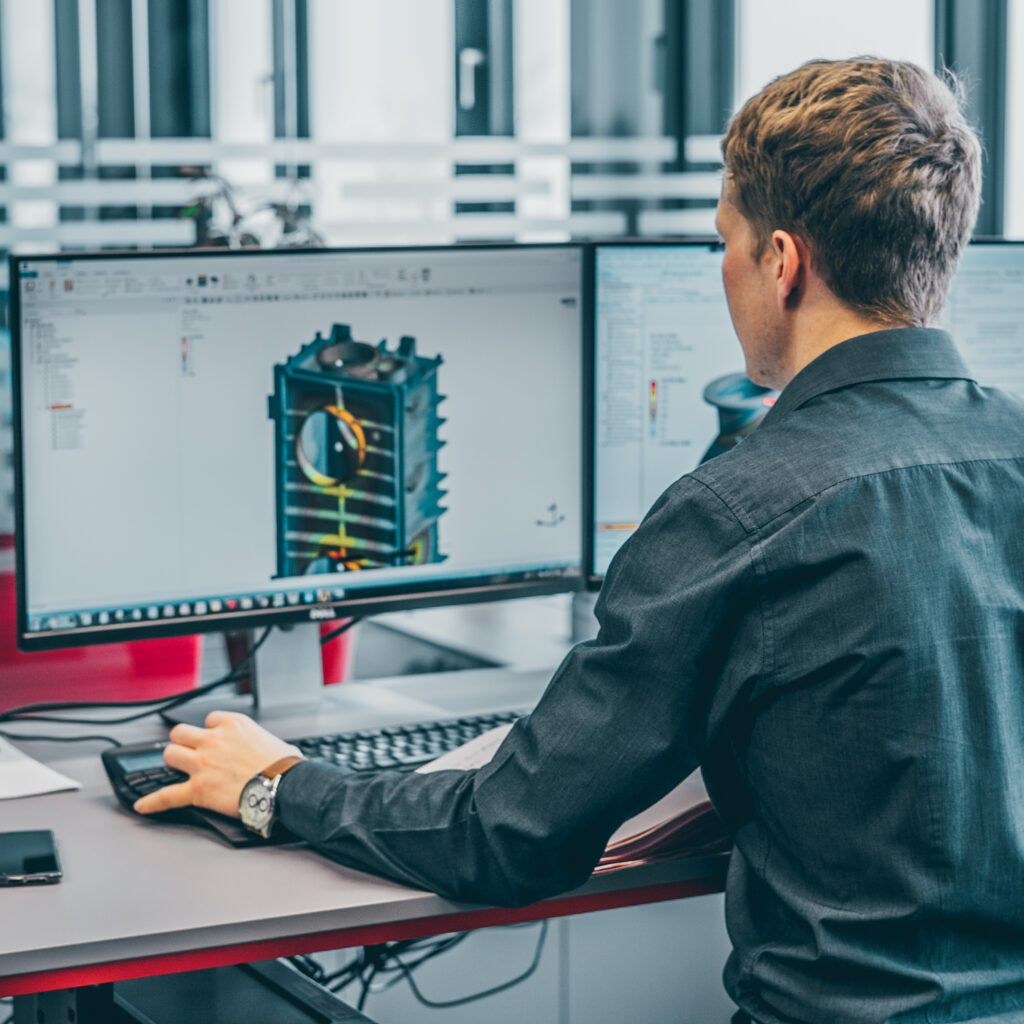
  • Simulations of the pressure transient are often used to more accurately predict real system behavior.

Pump types

  • The choice of pump type depends on the required vacuum range, gas load, and process compatibility.
  • Mechanical dry or oil pumps are used for roughing and as a backing stage for turbomolecular or diffusion pumps.
  • Turbomolecular pumps provide a high pumping speed for high vacuum (HV) and ultra-high vacuum (UHV) applications and allow for the rapid achievement of low pressures.
  • Diffusion pumps are suitable for aggressive gases, but they require high operating temperatures and often need an oil trap.
  • Cryogenic pumps effectively capture condensable gases and are ideal for very clean systems with low outgassing.
  • When selecting a pump, maintenance, energy consumption, and equipment lifespan must also be considered.
  • Incorrect pump selection can significantly increase pumping time and risk contamination or system damage.

Pressure profile

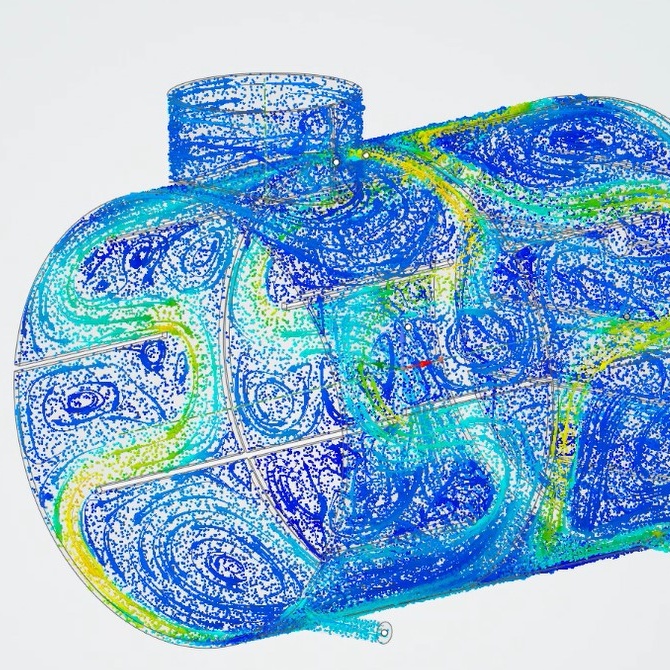
  • Analyzing the pressure profile during pumping helps us understand how quickly the system responds to pump startup and how it behaves during stabilization.
  • Pressure behavior is influenced by chamber volume, pipe conductance, pump type, and outgassing amount.
  • Initially, a rapid pressure drop occurs, followed by slower pressure reduction.
  • Simulations and transient measurements allow estimation of the time required to reach the target vacuum.
  • Uneven flow and dead volumes can cause local stagnation, which reduces the effective pumping speed.
  • Deviations from the theoretical pressure curve can indicate high outgassing or leaks.

Get in touch

Do you have questions about our Advanced Vacuum solutions?

Contact form

By submitting the form, I agree and acknowledge the processing of personal data.