Pressure rise testing
Pressure rise testing quickly and accurately detects leaks, ensuring reliability and safe operation.
Why to consider pressure rise testing?
Verifying chamber integrity
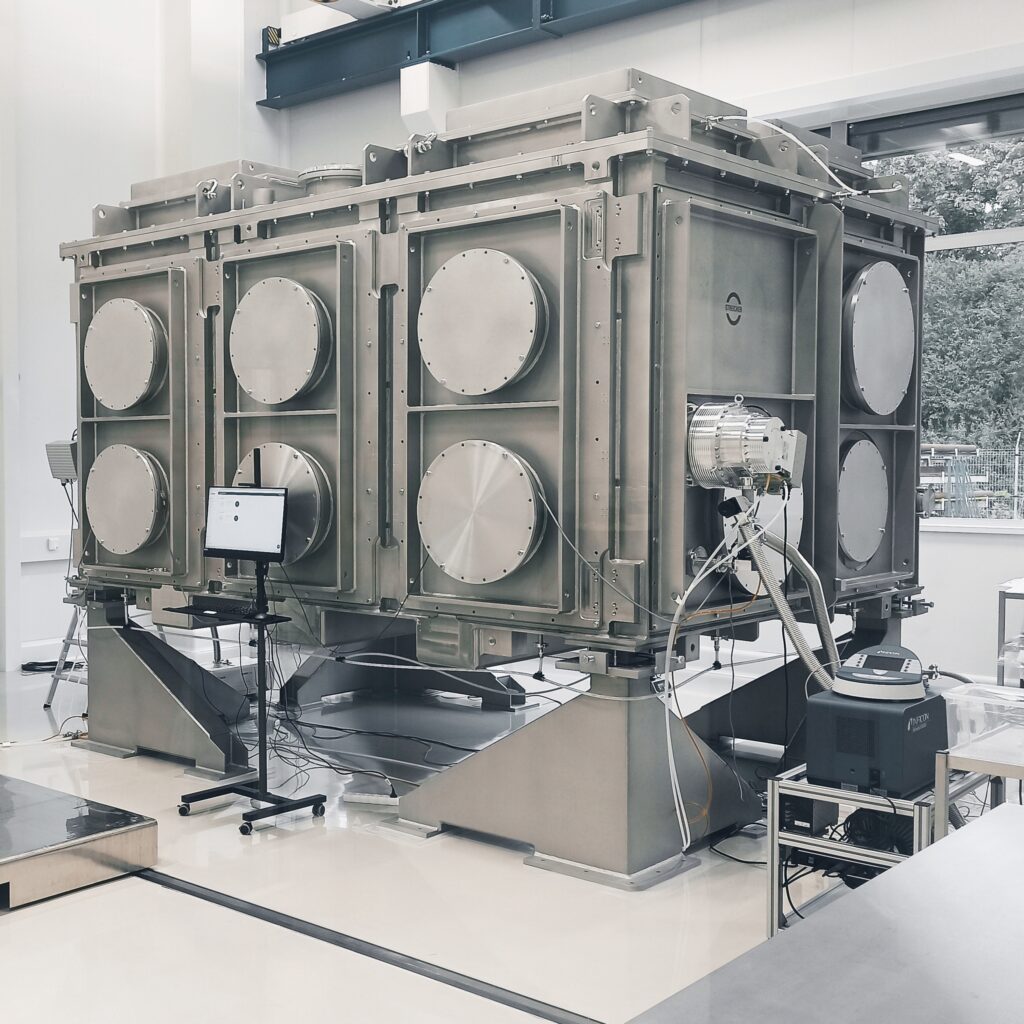
Pressure rise testing quickly detects leaks or weak points in the vacuum chamber. You can be confident that the chamber is fully sealed and ready for high or ultra-high vacuum.
Diagnosing hidden issues
The test helps identify whether the pressure rise is caused by leaks, residual moisture, or surface contamination. It reveals issues early, before they can affect processes.
Quality control
The pressure rise test is used during final inspections and periodic maintenance. You will gain clear insight into system conditions and have confidence in long-term vacuum stability.
Measurement techniques
- The principle involves isolating the chamber at a fixed volume and monitoring the pressure increase over time. Any rise in pressure indicates a leak or outgassing from materials.
- This test distinguishes between external leaks and internal outgassing from the walls, seals, or internal components.
- If the pressure rises faster than anticipated, there are probably more virtual leaks or significant contamination.
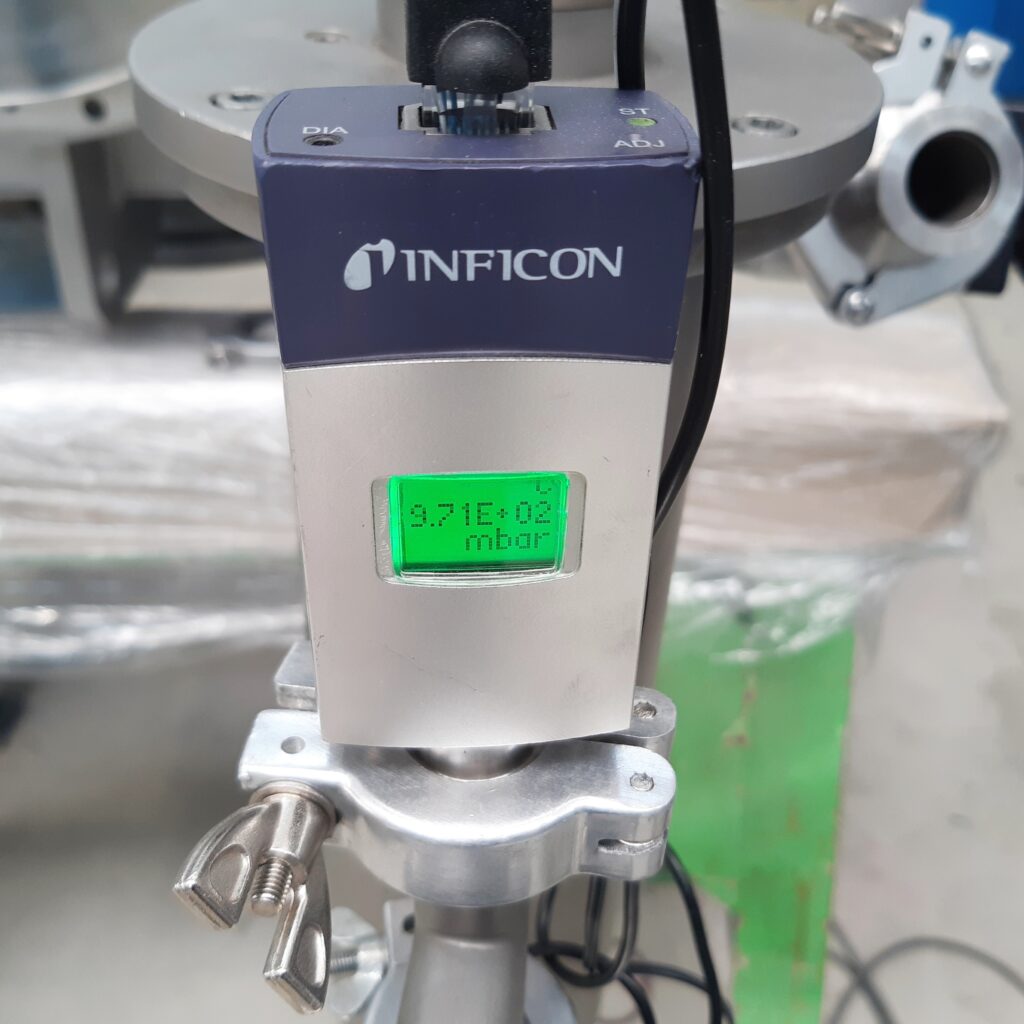
- Pressure rise measurements are performed using precise vacuum gauges, such as ionization, Pirani, or capacitance manometers, depending on the pressure range.
- To improve accuracy, minimize the influence of thermal shocks and vibrations during measurement.
- Some systems integrate data from multiple sensor types to better distinguish between outgassing and actual leaks.
Outgassing and permeation
- Outgassing is the release of gases from materials under vacuum conditions, which can affect the rise in pressure during testing.
- Permeation is the process by which gases diffuse through materials, such as polymer seals or membranes, without a direct leak.
- Permeation is relevant for gaseous media, such as helium and hydrogen, that have high diffusivity.
- Although metals typically have low outgassing and permeation rates, surface layers, oxides, and residual lubricants can increase the rate at which pressure rises.
- Plastics and polymers are sensitive and may release water, solvents, or plasticizers. This must be considered when interpreting data.
- Ceramics and glass are relatively inert; however, porous structures can trap and release moisture under vacuum.
- Surface treatments, such as polishing or passivation, reduce outgassing and improve test reliability.
- The desorption rate is influenced by chamber temperature; higher temperatures accelerate outgassing and lower temperatures slow it down.
Standardized testing
- Pressure rise testing follows ISO, ASTM, or SEMI standards, which define chamber preparation, measurement procedures, and result evaluation.
- The standards specify the initial pressure, observation time, types of gauges, and allowable tolerances.
- Tests are often performed after bake-out and system stabilization to minimize the effect of residual outgassing.
- Adherence to these standards ensures that measurements are reproducible and comparable across different equipment or laboratories.
- Some standards recommend combining pressure rise testing with helium leak detection for more precise problem localization.