Fluid / gas feedthrough
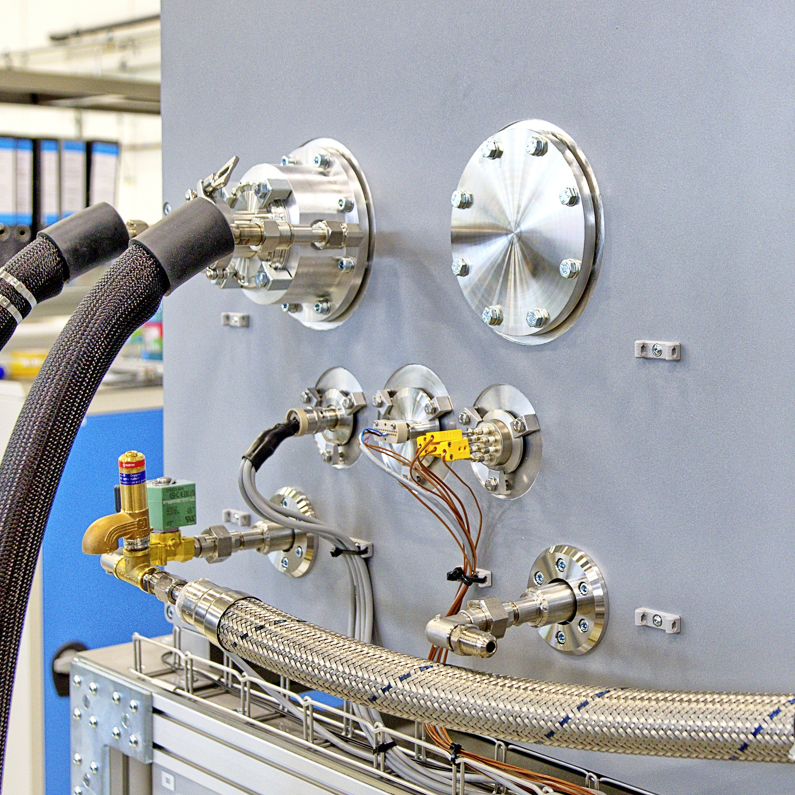
Fluid or gas feedthroughs allow liquids and gases to safely enter the vacuum chamber.
Why to consider fluid / gas feedthrough?
Maintaining vacuum
Feedthroughs enable precise dosing of gases or liquids to enter the vacuum chamber without compromising the vacuum and ensuring a stable and controlled environment of the process.
Sealing and materials
Feedthroughs are made from materials compatible with the process media and with minimal outgassing. Common components include metal seals, glass and ceramic insulators, and chemically resistant alloys.
Flexibility and extension
Feedthroughs on standard flanges enable expansion of the experimental setup without modifying the main chamber. This modification enables new test parameters or upgrades.
Principle
- Fluid/gas feedthroughs enable the safe transfer of media through the wall of a vacuum chamber or pressure vessel.
- Their primary function is to separate two pressure environments while maintaining continuous fluid or gas flow.
- The design typically includes mechanical housing, a sealing element (O-ring, metal gasket, or CF connection), and an internal passage for the medium.
- Minimal leak rate and compatibility with pressure, temperature, and the chemical nature of the medium need to be considered.
- They can be tailored to the application and may be used for cooling, heating, processing, gas delivery, or condensate removal.
- For liquids, it is important to ensure uniform flow and avoid cavitation or thermal shock to prevent seal degradation.
- The materials must resist corrosive agents and thermal cycling; thus, stainless steel, copper, Inconel, and ceramics are commonly used.
- They must also withstand repeated pressure and temperature cycles without losing tightness.
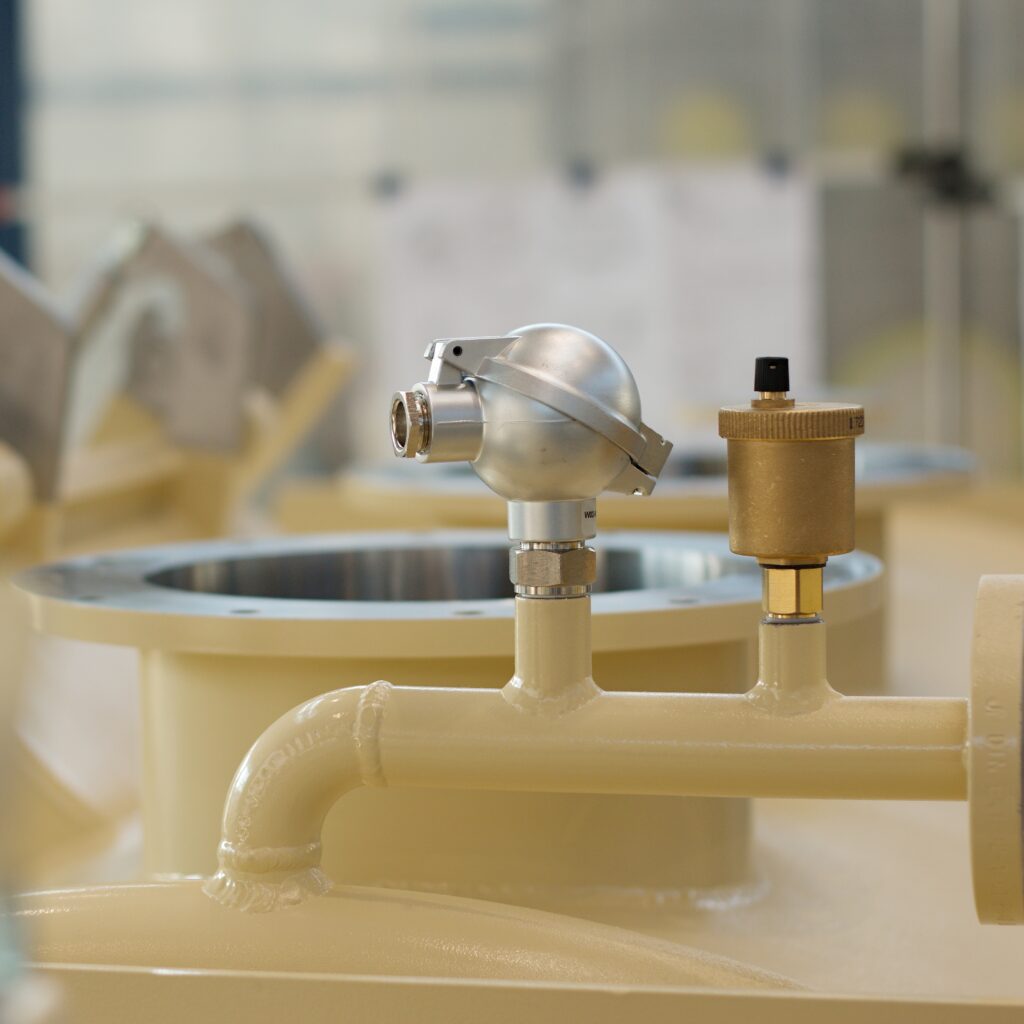
- In some cases, feedthroughs incorporate insulating or monitoring components to measure pressure, temperature, or flow.
Multi-channel
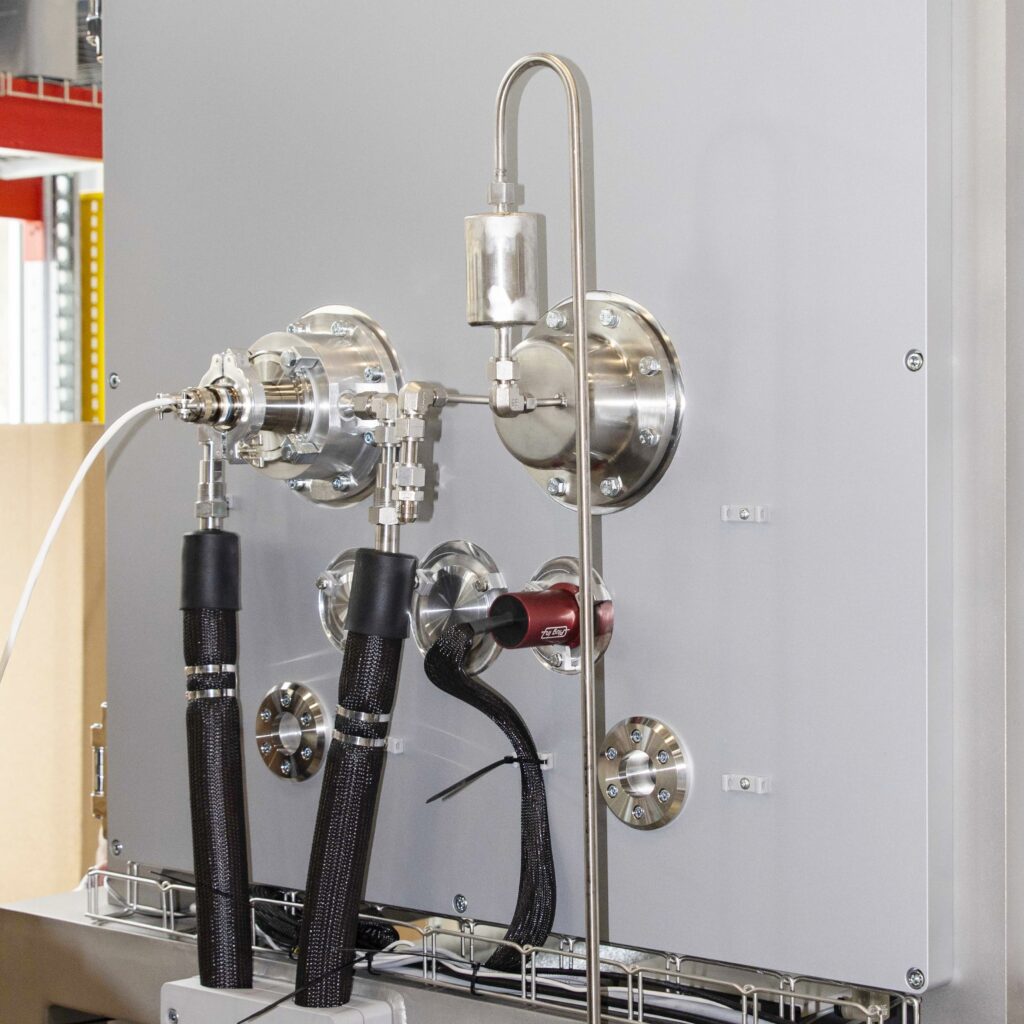
- Multi-channel feedthroughs enable the simultaneous delivery of multiple fluids or gases via a single vacuum feedthrough.
- Each channel may include integrated sensors for pressure, temperature, or flow to provide process feedback.
- The design minimizes channel crossover and pressure losses.
- Seals may be metallic, elastomeric, or a combination of the two, and are often double-sealed for UHV conditions.
Temperature control
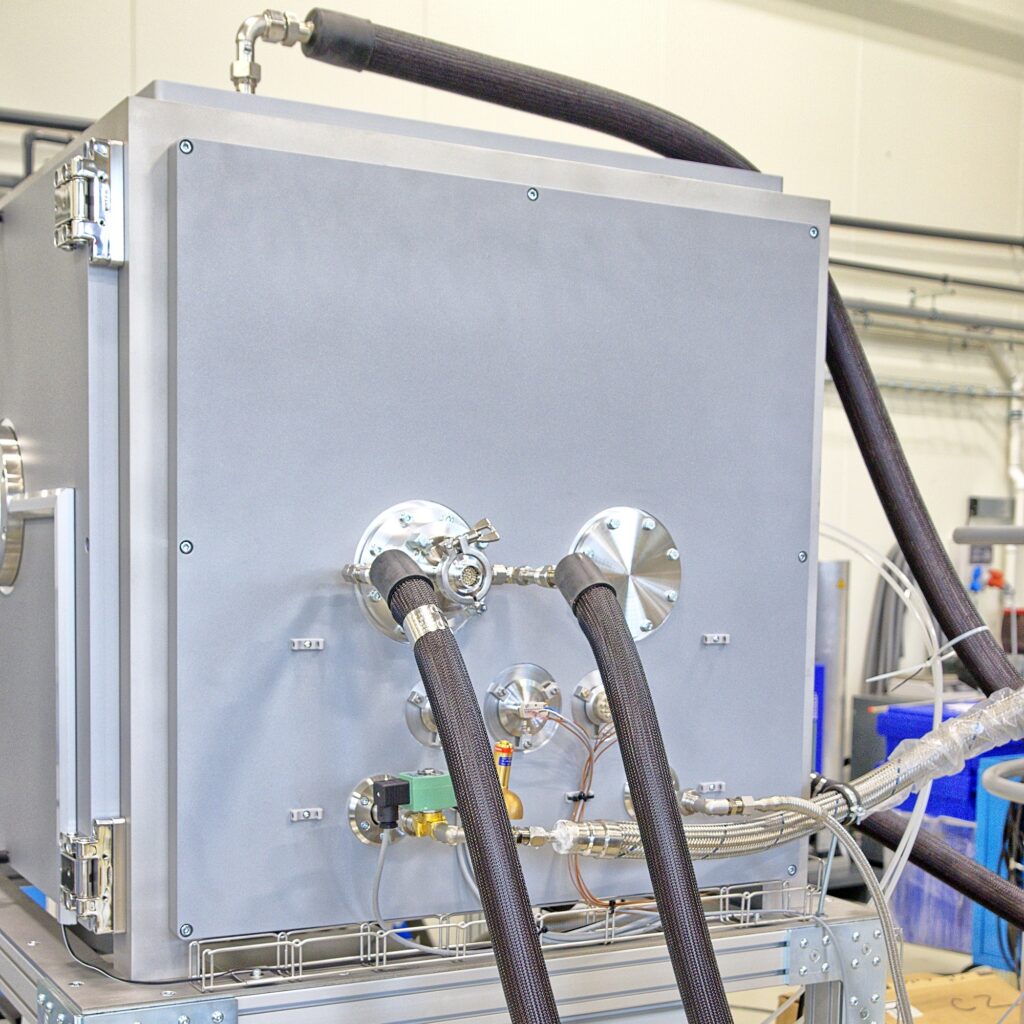
- Feedthroughs connected to tempered areas, such as tables and shrouds, enable the transfer of fluids or gases at controlled temperatures.
- A thermal unit or process vessel regulates the circulating medium to maintain a set temperature. Depending on the chosen configuration, the medium can be oil, liquid nitrogen, or another fluid.
- The body and channel materials ensure medium compatibility and vacuum resistance.
- Integrated sensors monitor the temperature, flow, and pressure of the medium, providing feedback and control.