Electrical feedthroughs
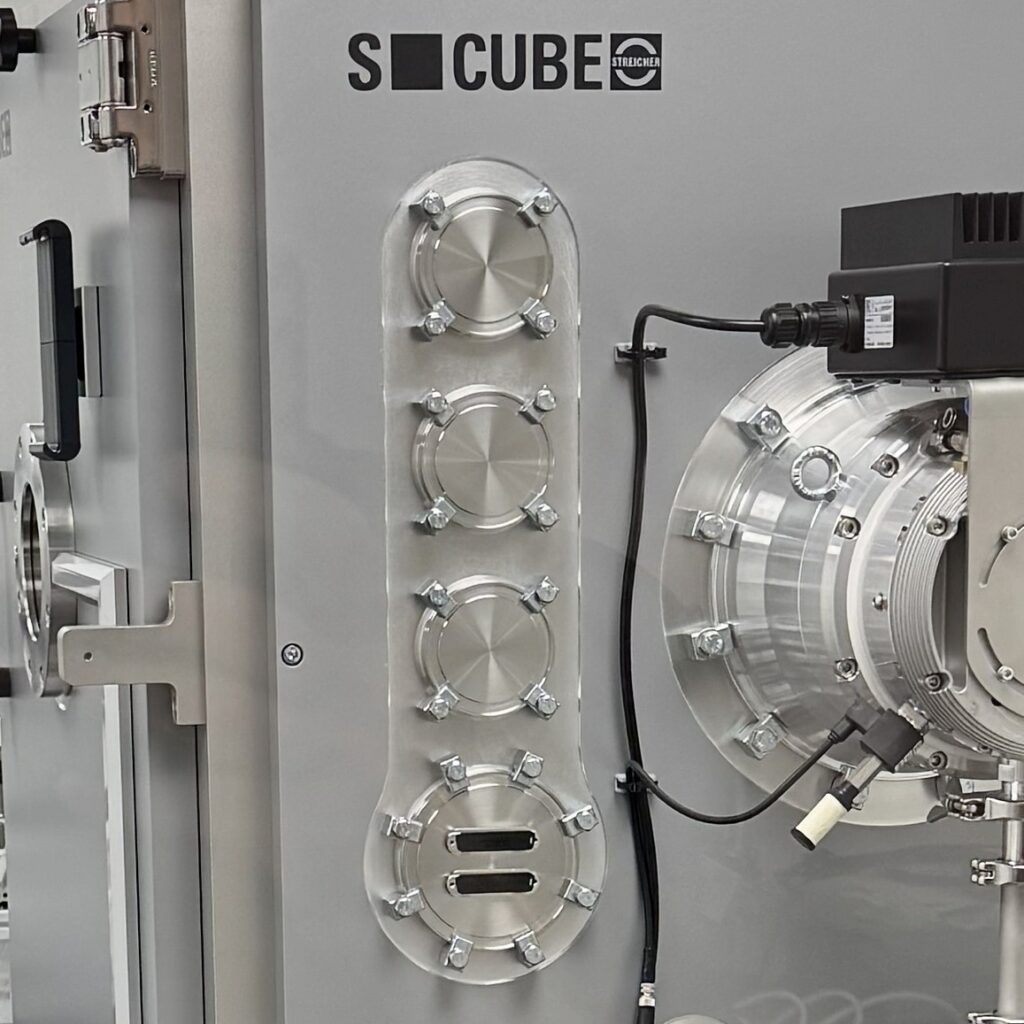
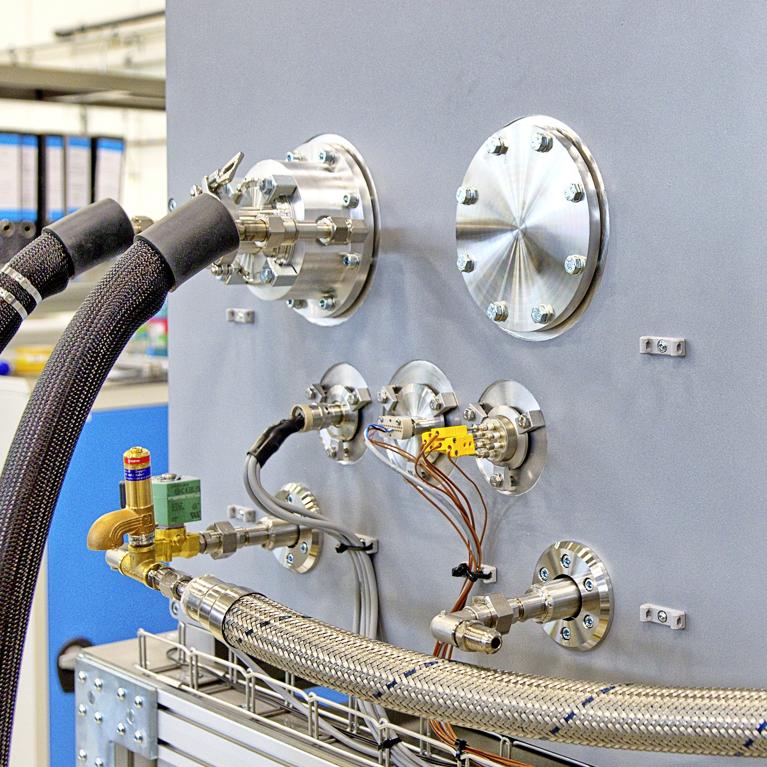
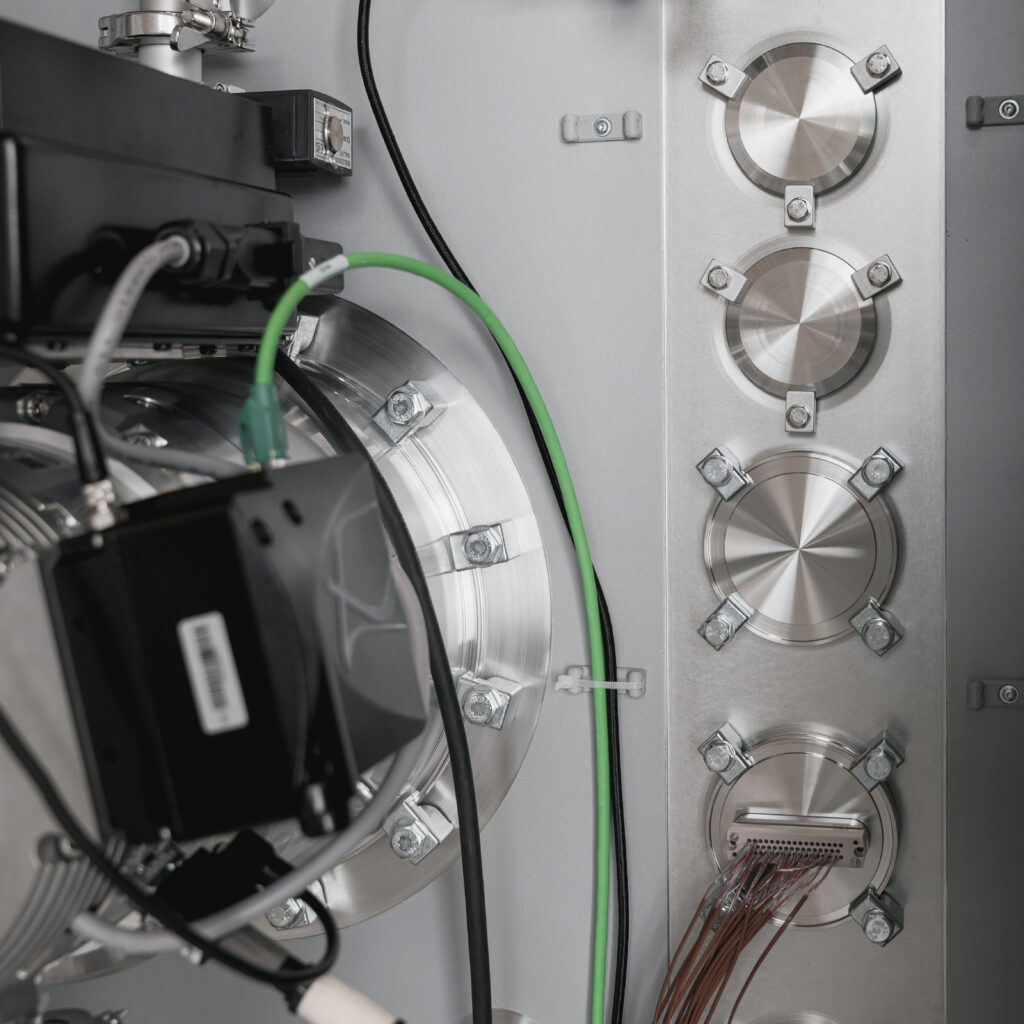
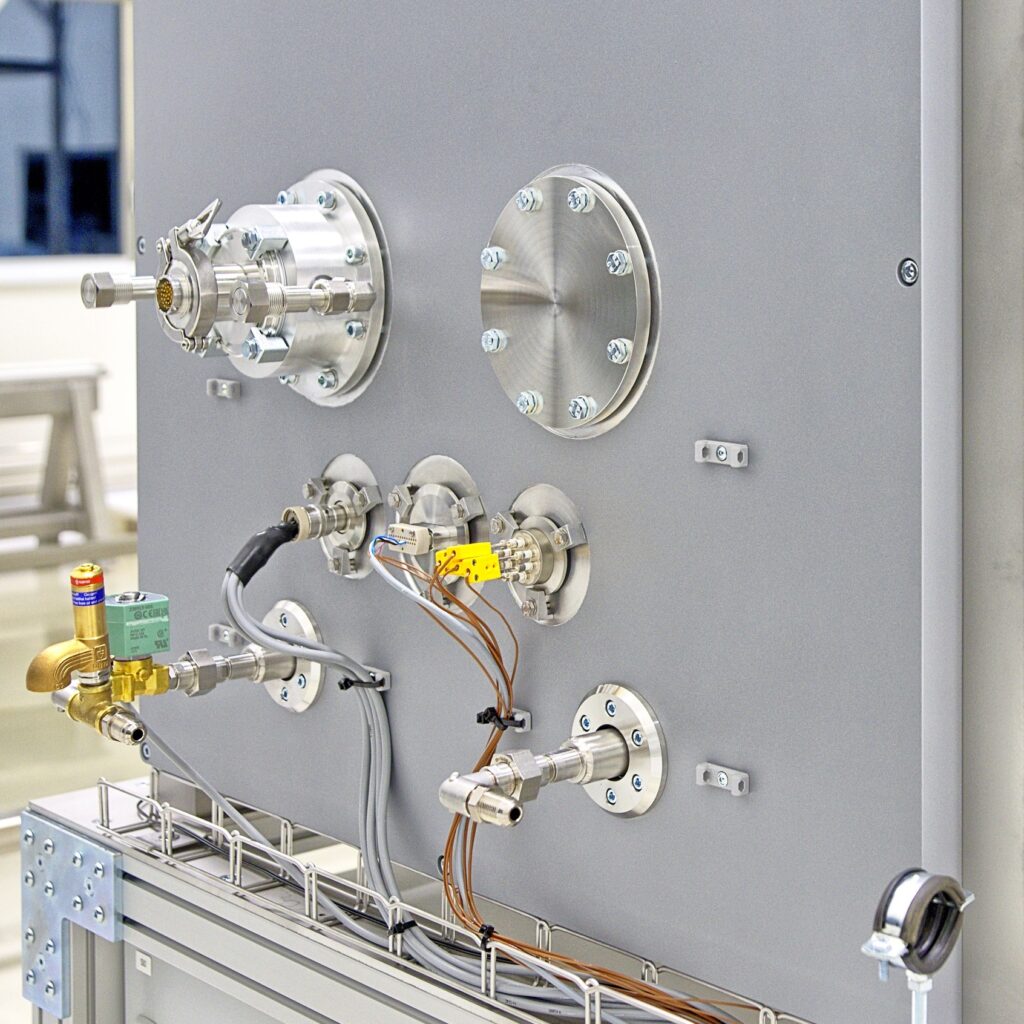
Electrical feedthroughs provide connection between the internal and external circuits of a vacuum chamber.
Why to consider electrical feedthroughs?
Signal and power transmission
They allow electrical signals and power to enter the vacuum chamber without breaking the vacuum for control of sensors, heating elements, or electronics inside the chamber.
Monitoring and data acquisition
Feedthroughs connect sensors inside the vacuum chamber to external measurement and control systems, enabling real-time monitoring of parameters such as temperature, pressure, current, or others.
Flexibility and expandability
Feedthroughs on standard flanges enable easy adaptation to different experimental conditions or production processes, as they can be modified even after the chamber is finished.
Principle
- Electrical feedthroughs allow electrical currents or signals to pass through the wall of a vacuum chamber while maintaining full vacuum integrity.
- They have electrically conductive pins or conductors that are isolated from the chamber body by an insulating material with high dielectric strength, such as ceramic or glass.
- This electrical insulation ensures that no dielectric breakdown occurs, even under high voltage or temperature fluctuations.
- They are available in single-pin, multi-pin, coaxial, and RF configurations depending on the current load and signal frequency.
- For high-voltage feedthroughs, careful attention must be paid to electrode geometry and insulation spacing to prevent corona discharge or arcing.
- Feedthroughs are critical in PVD/CVD systems, particle accelerators, spectroscopy setups, and cryogenic or high-temperature equipment.
Power feedthroughs
- Power feedthroughs allow electrical power with high voltage or current to be transmitted through the wall of a vacuum chamber.
- For UHV applications, feedthroughs should meet extremely low leak rates of less than 5×10⁻¹⁰ mbar·l/s.
- Depending on the feedthrough design and materials, operating temperature ranges can be wide, from −196 °C up to +450 °C.
- Selection criteria include current and voltage ratings, conductor diameter, pin material, flange type, and vacuum and environmental requirements (HV vs. UHV).
- Special variants, such as “Power Glove” feedthroughs, provide high voltage (5 kV to 40 kV) with an attached high-voltage cable.
- These feedthroughs incorporate ceramic insulators, metal housings, and conductive pins. The materials and construction techniques are engineered to withstand the harsh conditions of thermal cycling, vibrations, and chemical exposure.
Multi-channel
- Multi-channel feedthroughs allow multiple electrical signals to pass through a single flange via insulated connections.
- Each channel is individually insulated, enabling the safe transmission of signals at different voltages and currents.
- The design is optimized to minimize electromagnetic interference and electrical breakdowns.
- For maximum convenience, custom-made flanges can be provided, allowing easy connection through a single flange.