CF sealing

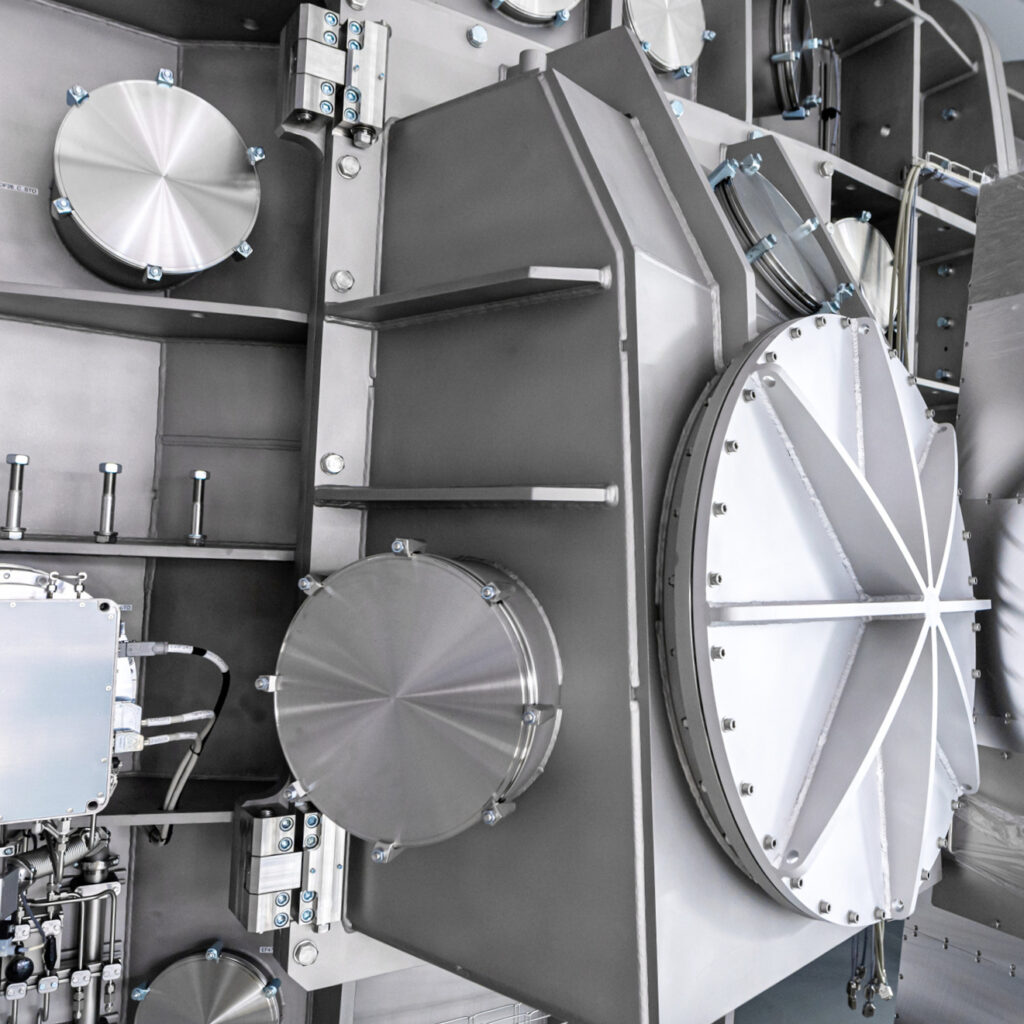
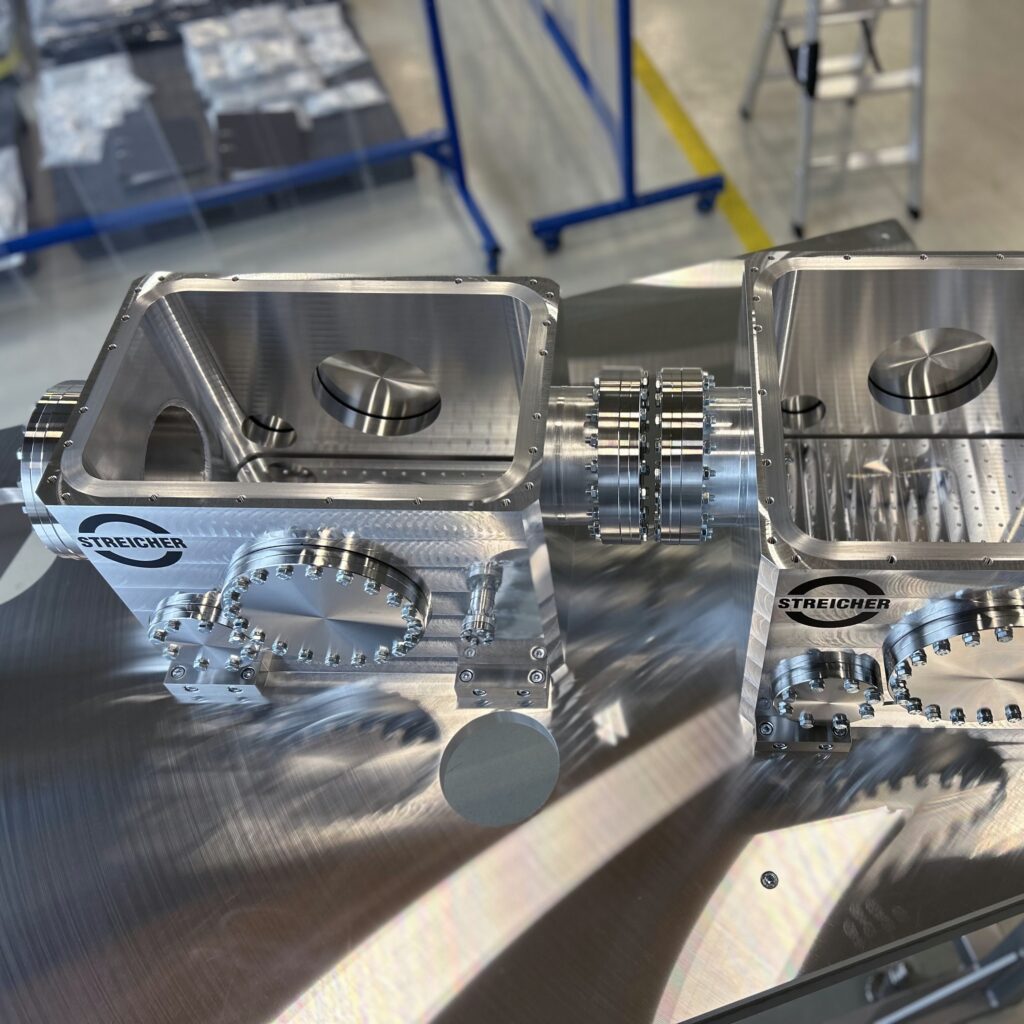
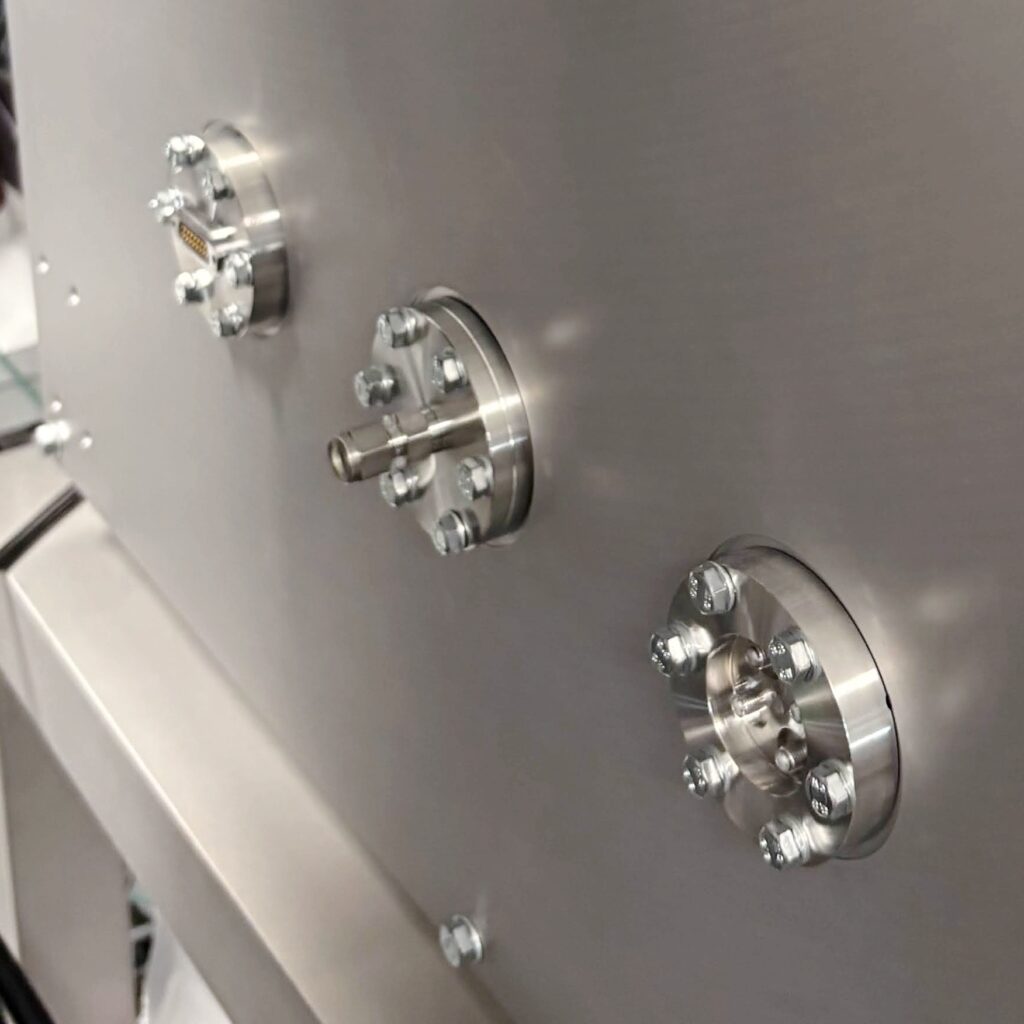
CF sealing provides a vacuum-tight, long-lasting connection, making it ideal for demanding applications that require high reliability.

Why to consider CF sealing?

Absolute tightness

The mechanically deformed copper or aluminum gasket deforms upon tightening to create a permanent metal-to-metal seal. It provides leak-tight performance down to 10⁻¹¹ mbar.

Thermal and chemical resistance

CF seals can withstand temperatures of up to 450 °C and are unaffected by chemicals or plasma exposure. They allow repeated bake-outs and use in harsh environments without seal degradation.

Permanent and clean

The CF system contains no elastomers or organic materials that could cause outgassing or contamination; however, it is non-detachable.

Material selection for flanges and gaskets

  • Flanges are commonly made from stainless steels 304 and 316L due to their mechanical strength, corrosion resistance and compatibility with bake-out procedures.
  • OFHC (oxygen-free high conductivity) copper is the standard gasket material due to its ability to plastically deform under a knife edge and its low outgassing rate.
  • For special conditions, modified or plated gaskets (silver- or nickel-plated) can improve repeatability and reduce adhesion to the flange.
  • When working with aggressive process gases, at high temperatures or in a UHV environment, one must consider material purity, trace impurities and structural stability during bake-out.
  • Long-term operation and repeated cycles can wear the flange knife edge. The choice of material for the flange and the hardness of the gasket influence the number of safe reuse cycles.

Surface finish and flatness requirements

  • The performance of a CF seal depends on the sharpness of the knife-edge of the flange and the smoothness and flatness of the mating faces.
  • The surface roughness and flatness should be on the order of micrometers to tens of micrometers.
  • Proper alignment and symmetrical bolt torque produce even compression of the gasket. Uneven loading can cause localized leaks or premature knife-edge wear.
  • Flanges must be clean and free of oil or particulates.
  • For reusable joints, inspect the knife-edge after each disassembly. Light re-machining or flange replacement is advisable if significant damage is present.
  • When specifying tolerances, consider thermal expansion to ensure that flatness is maintained during bake-out cycles.

Cryogenic and high-temperature

  • CF joints are suitable for use across a wide temperature range. Standard copper gaskets and stainless steel flanges can withstand common bake-out and cryogenic conditions, but the choice of material must take into account thermal expansion and brittleness at low temperatures.
  • In cryogenic applications, thermal stresses and differential contraction occur between the flange and the gasket; indium or specialized alloys are therefore used to improve conformity.
  • For high-temperature bake-outs, choose copper or alloy gaskets that retain their integrity without carbonizing or becoming contaminated.
  • Repeated thermal cycling can accelerate knife-edge fatigue and reduce the lifetime of the flange and gasket.

Get in touch

Do you have questions about our Advanced Vacuum solutions?

Contact form

By submitting the form, I agree and acknowledge the processing of personal data.