Chamber manufacturing possibilities and size

We can customize the system to meet your exact needs or provide an easy-to-use, off-the-shelf product.

Why customizable chambers make the difference?

Size and geometry customization

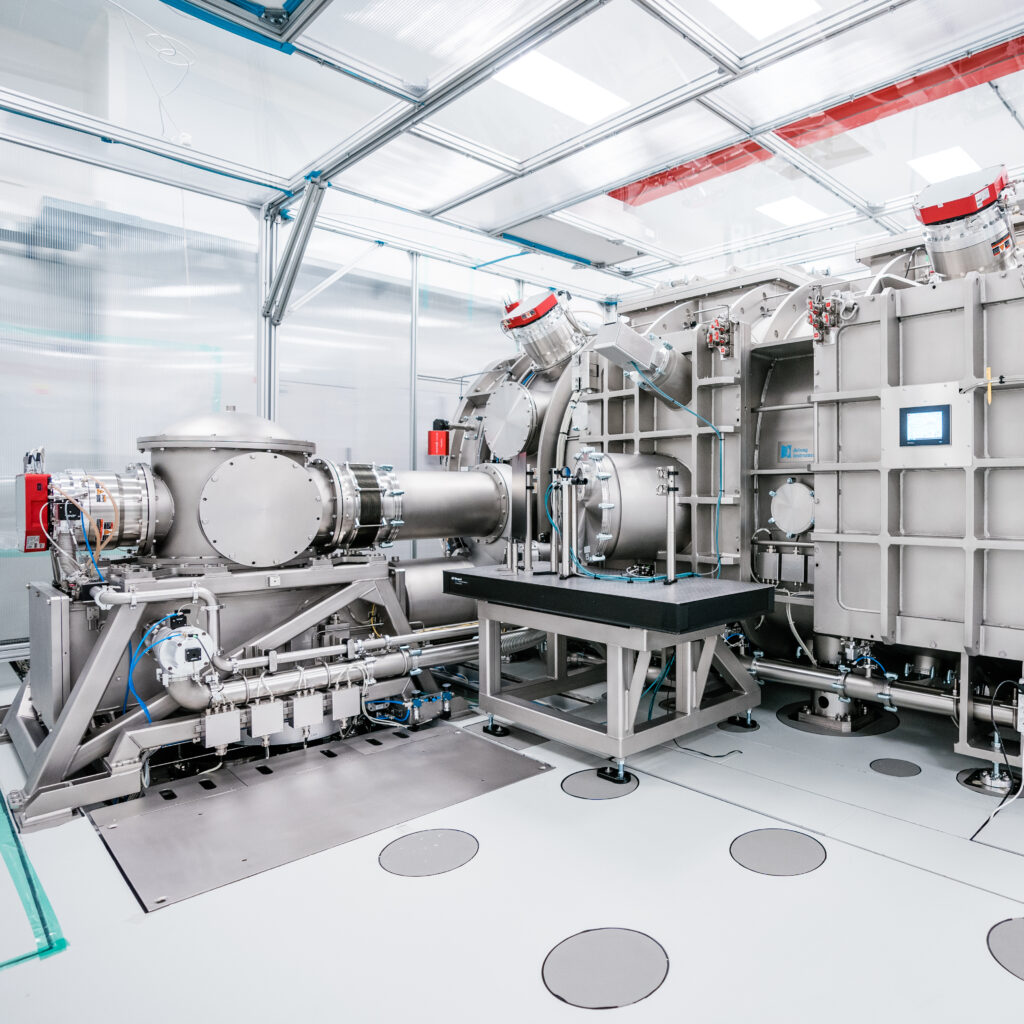
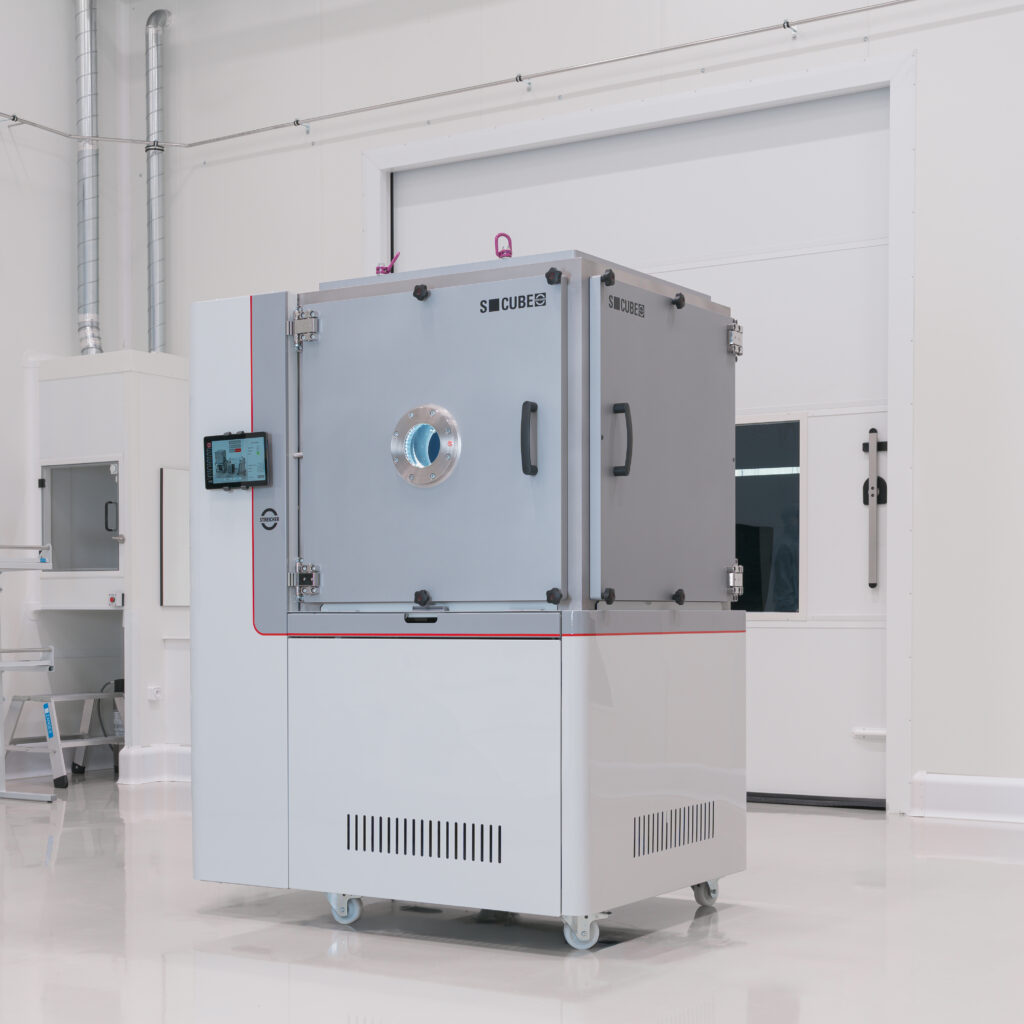
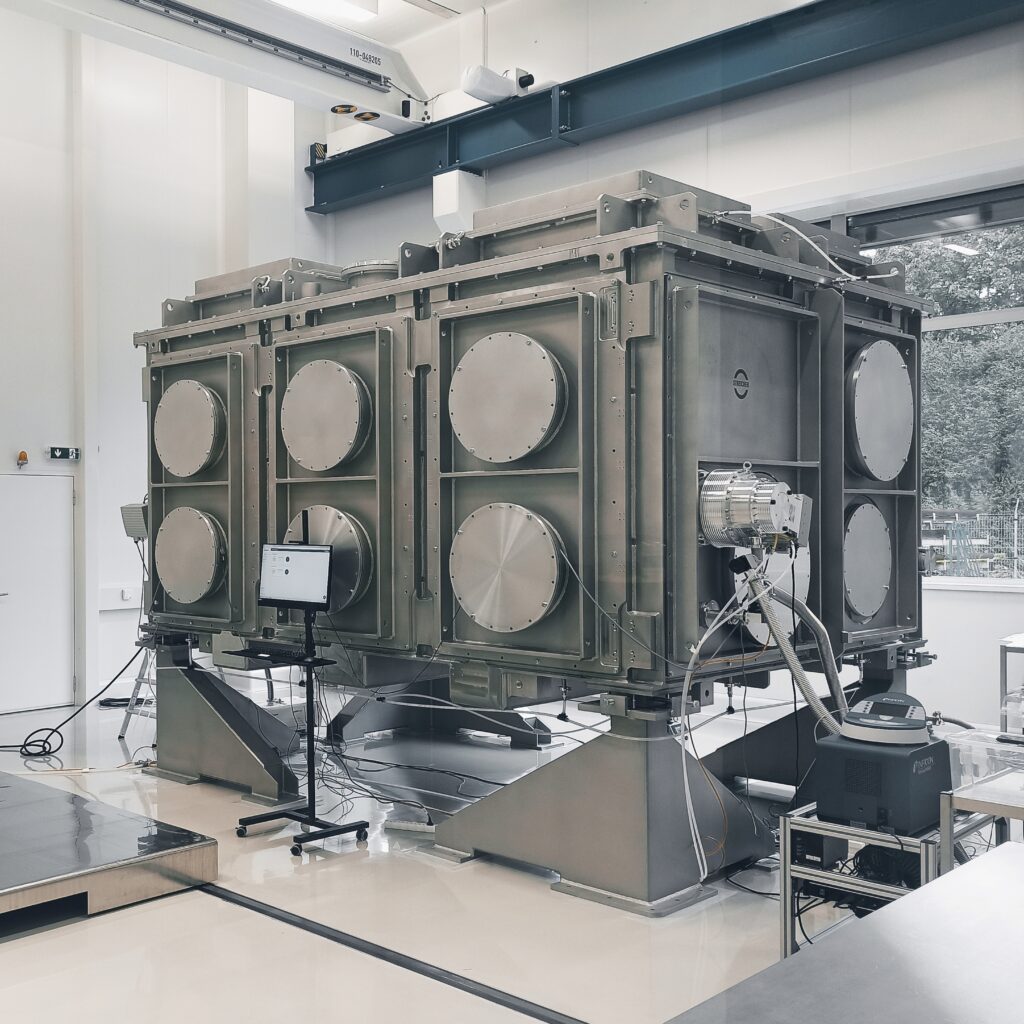
Vacuum chambers can be manufactured in various sizes and shapes according to process requirements. They range from small analytical chambers to large industrial systems.

Materials and manufacturing

Chambers are made from materials with low outgassing, high strength, and corrosion resistance. Manufacturing technologies such as welding, machining, and surface treatment affect chamber quality and the achievable vacuum level.

Expandability and modular design

Larger or modular chambers allow for the addition of equipment, feedthroughs, or load-locks as needed. This enables system expansion and the integration of new technologies into existing chambers.

Chamber size ranges

  • The size of a vacuum chamber is determined by its purpose, available space, pressure requirements, and pumping performance.
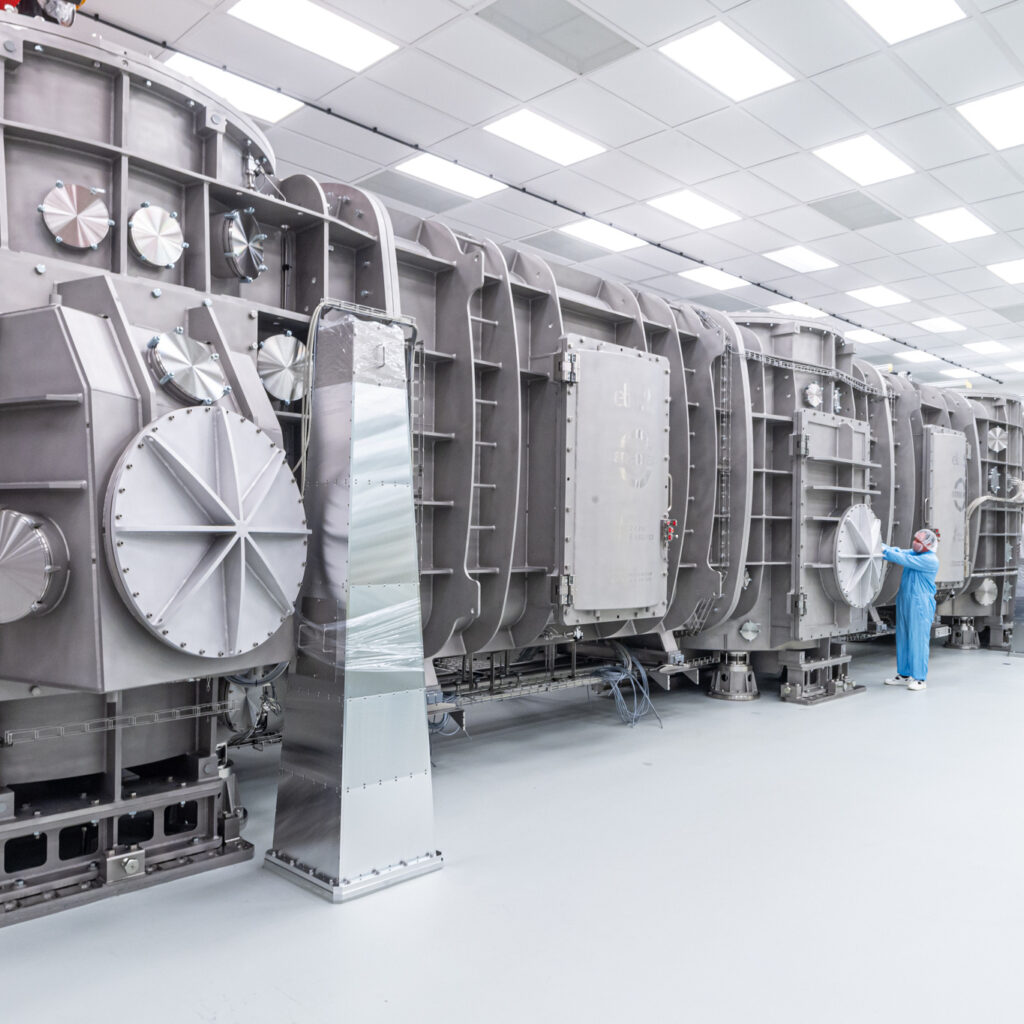
  • We can create vacuum chambers of any size and shape. For example, we can create an 18-meter-long, 3.5-meter-wide, and 4-meter-high ELI compressor L4.
  • Laboratory chambers typically range from a few to several dozen liters and are used for testing or calibration.
  • Industrial chambers for PVD or CVD processes can reach volumes of hundreds or thousands of liters.
  • Large systems for photonics or semiconductor manufacturing can exceed two meters in diameter and several meters in length.
  • Modular designs are often used for large-scale systems to simplify transport and assembly.
  • Modules can weigh up to 100 tons.

Simulation in design

  • Structural simulations using Finite Element Method (FEM) are employed in the design of vacuum chambers to verify mechanical strength, deformation, and thermal behavior.
  • Analyses include atmospheric pressure loading, component weight, and temperature gradients during bake-out or operation.
  • These calculations optimize wall thickness, reinforcement, and flange design to prevent unnecessary weight increases.
  • Thermal simulations monitor temperature distribution and material expansion to prevent leaks during heating cycles.
  • ANSYS software is used with material models for stainless steel, aluminum, and Inconel.

Scaling effects

  • Increasing the size of the vacuum chamber directly affects pumping characteristics, pressure stability, and achievable vacuum levels.
  • Larger volumes result in longer evacuation times, higher pump capacity requirements, and increased sensitivity to leaks and outgassing.
  • Pressure distribution may become non-uniform, especially in complex or multiport geometries.
  • Maintaining stable vacuum conditions requires the optimized placement of pumps, valves, and pressure sensors.
  • Material properties also play a role; larger chambers often require additional reinforcement to prevent deformation under vacuum.
  • Scaling can affect gas flow dynamics, which can impact deposition uniformity or process yield.

Get in touch

Do you have questions about our Advanced Vacuum solutions?

Contact form

By submitting the form, I agree and acknowledge the processing of personal data.