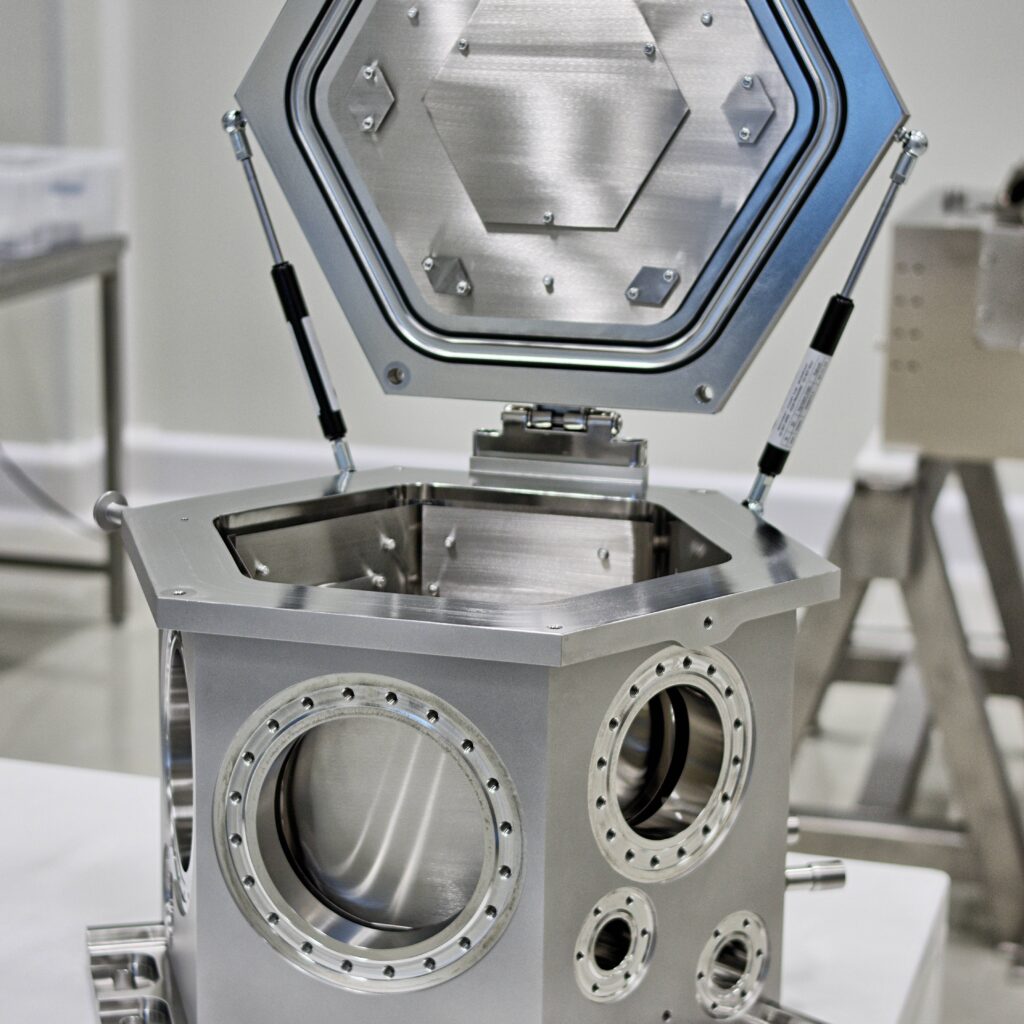
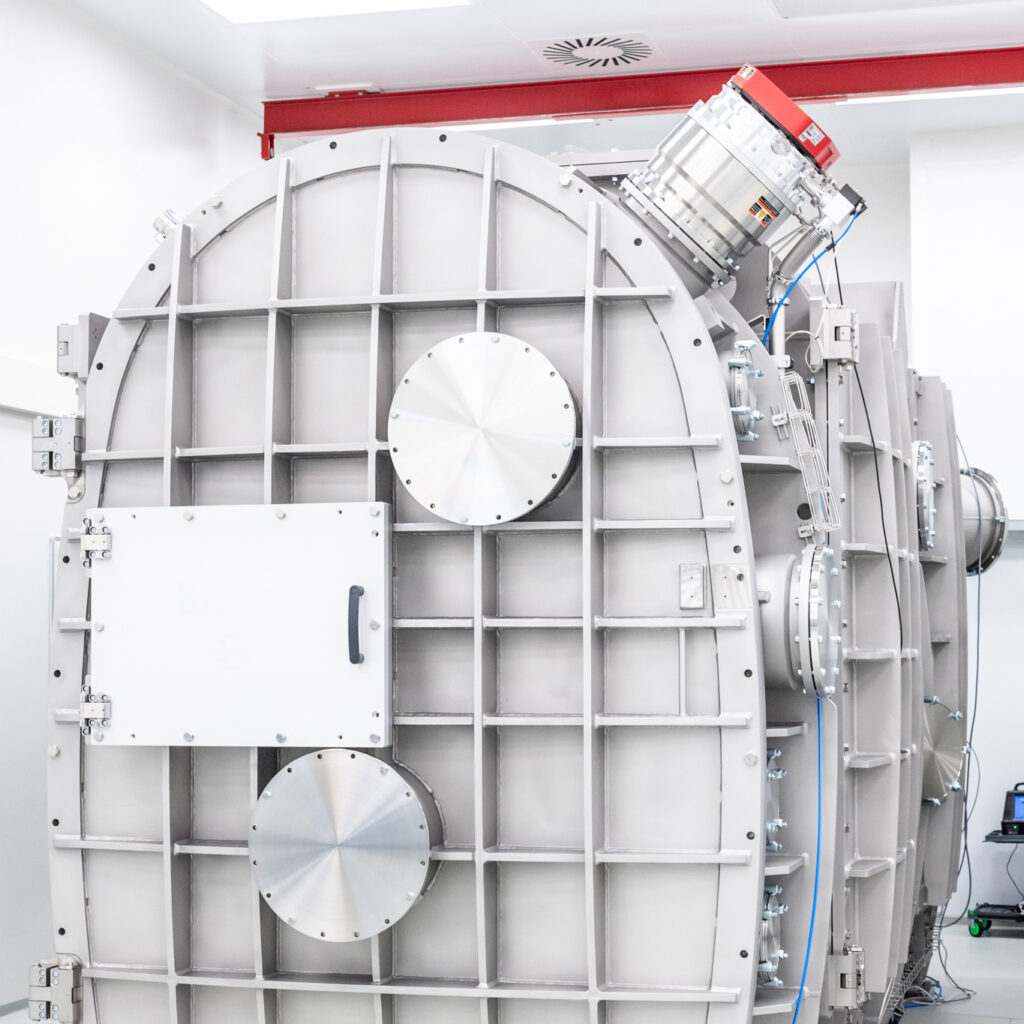
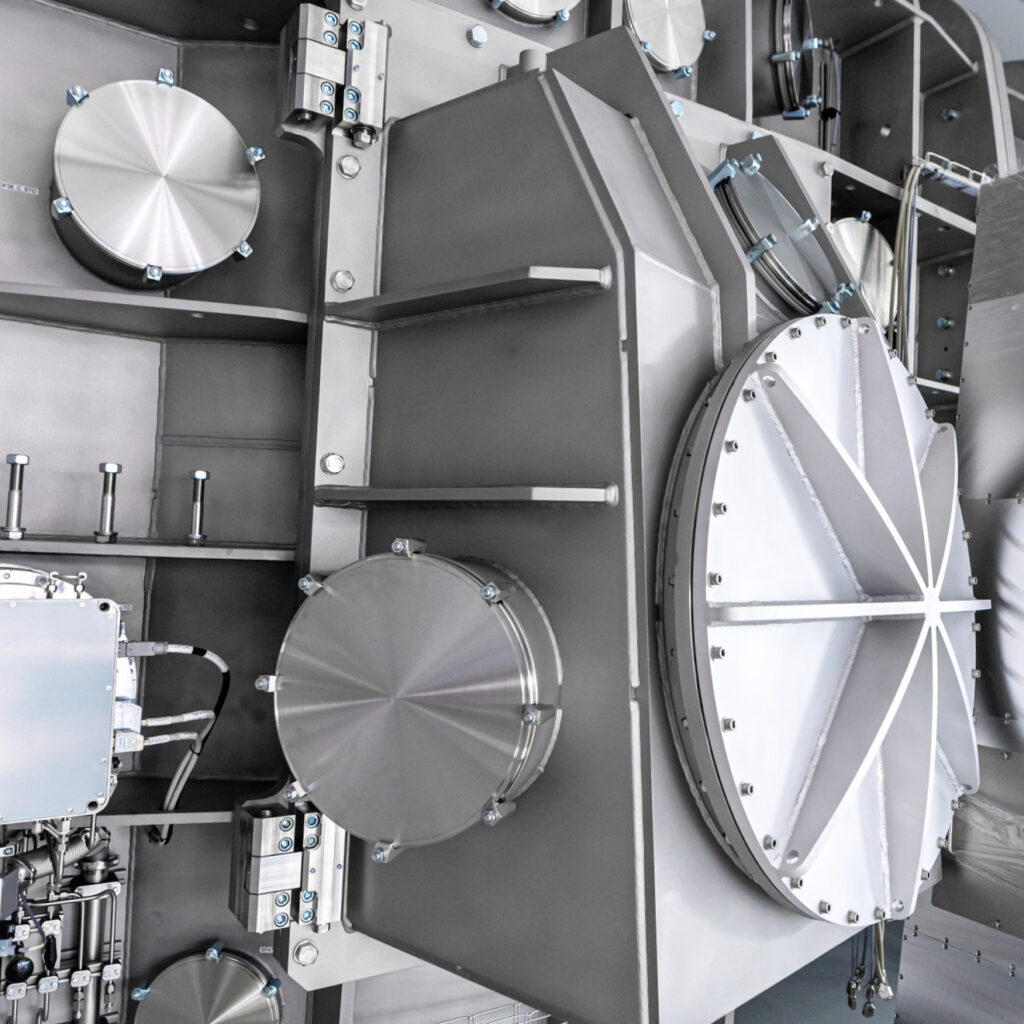
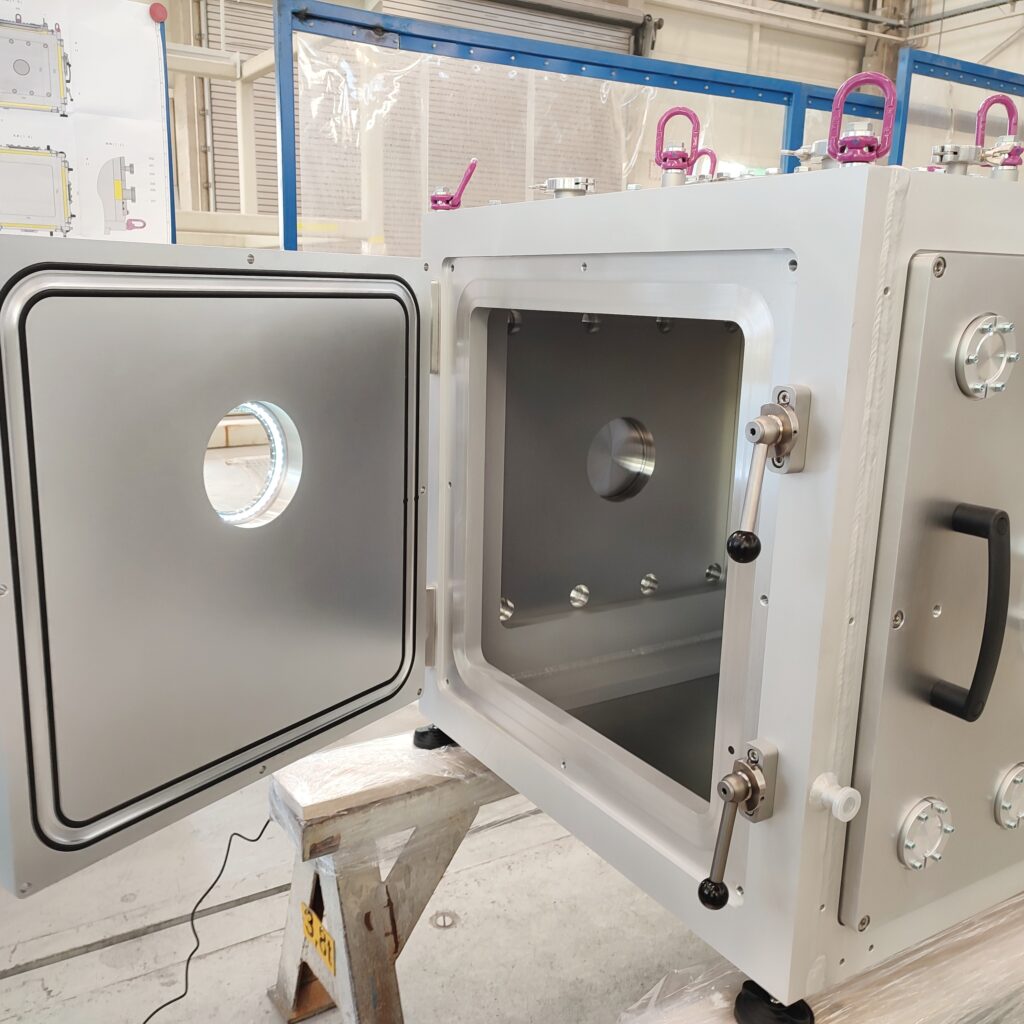
FKM double O-rings

FKM double O-rings provide an extra level of sealing and reliability, making them ideal for critical vacuum applications.

Why to consider double O-ring?

Higher sealing performance

Double FKM O-rings provide two independent barriers against leaks, increasing the overall vacuum tightness It also enables ‘interspace leak testing’, which involves monitoring the area between the rings.

Safety and stability

If one ring is damaged, the second ring maintains the vacuum, keeping the system fully operational. This ensures stable conditions, even during long-term or cyclic operation.

Testing and maintenance

The space between the O-rings can be used for pressure or helium leak testing, which simplifies operational checks and maintenance, and ensures chamber certification for high vacuum use.

Leak prevention

  • Double O-rings provide redundant sealing, with one O-ring acting as the primary seal and the other as the backup seal.
  • This minimizes the risk of leaks in critical applications such as HV/UHV systems or load-lock chambers.
  • Double sealing reduces the likelihood of failure due to micro-cracks, permeation or localized material degradation.
  • In some systems, the secondary O-ring can capture leaks during bake-out or chemically aggressive processes.

Testing and qualification

  • After installing double O-rings, leak testing confirms the effectiveness of both seals.
  • Common methods include pressure rise tests, whereby pressure increases in a closed chamber are monitored, and helium leak detection for high sensitivity.
  • Testing should assess both the primary and secondary O-rings to ensure complete sealing.
  • Tests are often performed after bake-out and before system operation to detect potential micro-leaks.
  • Documenting the results of these tests is important for system qualification and tracking the lifespan of the seals.
  • Proper evaluation of the tests helps to identify issues with installation or materials and prevent operational failures.

Interspace evacuation

  • The space between the O-rings can be evacuated to make it tighter.
  • This approach enables leaks through the primary O-ring to be detected while gases escaping past the secondary seal are captured.
  • Interspace evacuation increases the reliability of HV/UHV systems and reduces the risk of contamination in the process chamber.
  • Small pumps or valves are often used to control the evacuation of gases.
  • The interspace evacuation system also effectively reduces gas permeation through the FKM material because any gas diffusing through the first O-ring is immediately removed from the interspace.
  • Interspace evacuation is commonly used in critical applications such as PVD/CVD systems, load-lock chambers, and HV and UHV applications.

Get in touch

Do you have questions about our Advanced Vacuum solutions?

Contact form

By submitting the form, I agree and acknowledge the processing of personal data.